Reference · 2 min read
UQD quick disconnects
UQD (Universal Quick Disconnect) is the OCP-standardized family of dripless coolant couplings: any compliant plug meets any compliant socket across vendors. Sizes run UQD04 → UQD40, where the number ≈ nominal flow in L/min — a per-plate loop typically uses UQD06–UQD12, rack manifolds aggregate to UQD32/UQD40 territory.
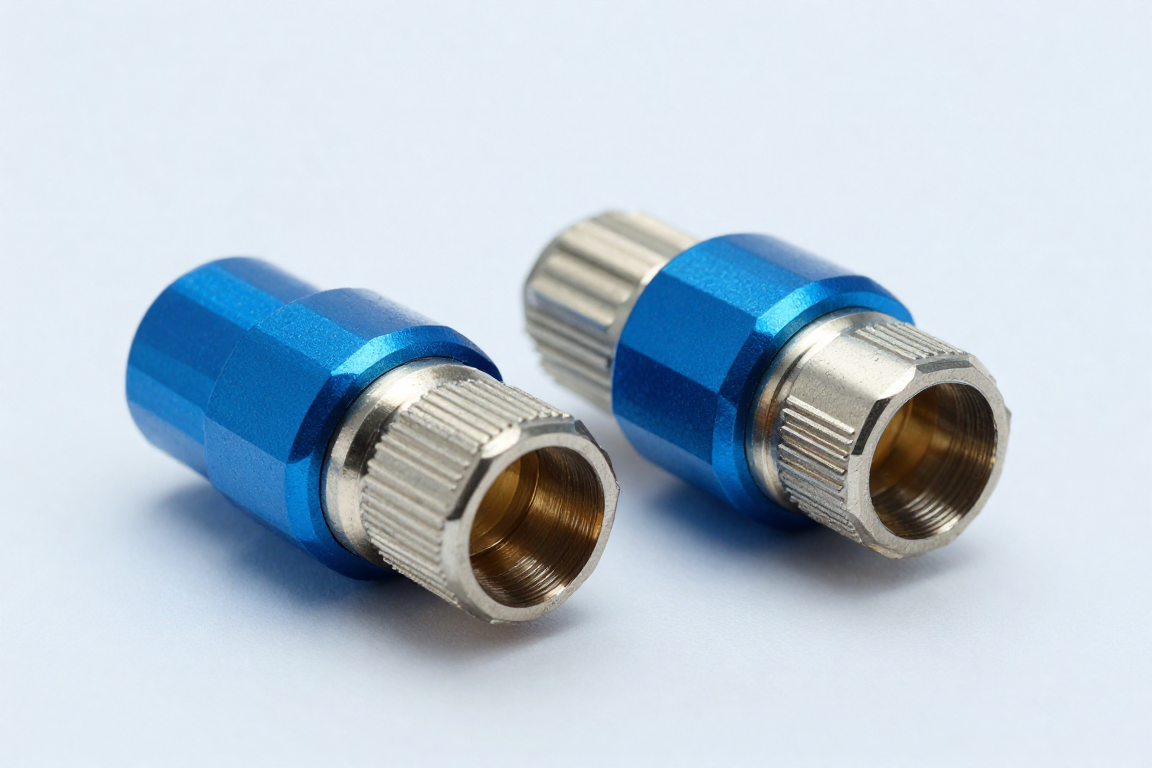
The size table
| Size | Nominal flow | Typical use |
|---|---|---|
| UQD04 / UQD06 | ≈ 4 / 6 L/min | Single cold plate loops (CPU plates, entry nodes) |
| UQD08 / UQD12 | ≈ 8 / 12 L/min | High-power GPU plate pairs, accelerator nodes |
| UQD16 / UQD22 | ≈ 16 / 22 L/min | Multi-plate node loops, dense 1U twins |
| UQD32 / UQD40 | ≈ 32 / 40 L/min | Rack-level manifold feeds, CDU headers |
Why it matters
- Interoperability. Standardized bodies and seals mean cold plates, manifolds and CDUs from different vendors mate — the open-ecosystem defense against lock-in (liquid-ready servers).
- Dripless disconnects. Valves close on separation, spilling at most a film of residue — the difference between a serviceable rack and a hazmat event (leak design).
- Blind-mate option. Combined with ORv3 manifolds, servers connect by sliding in — no hand-plumbing per node (how the loop fits together).
- Size honestly. An undersized UQD is the highest-pressure-drop element in a sub-loop; check the curve, not just the mating chart.
Related
Standards overview · Pressure drop · Coolant flow rate · Glossary
Sources
OCP Cooling Environments / UQD specification family (opencompute.org). Nominal flows are the size-class ratings; exact curves are per vendor and per fluid temperature — request them in the RFQ (RFQ checklist).